
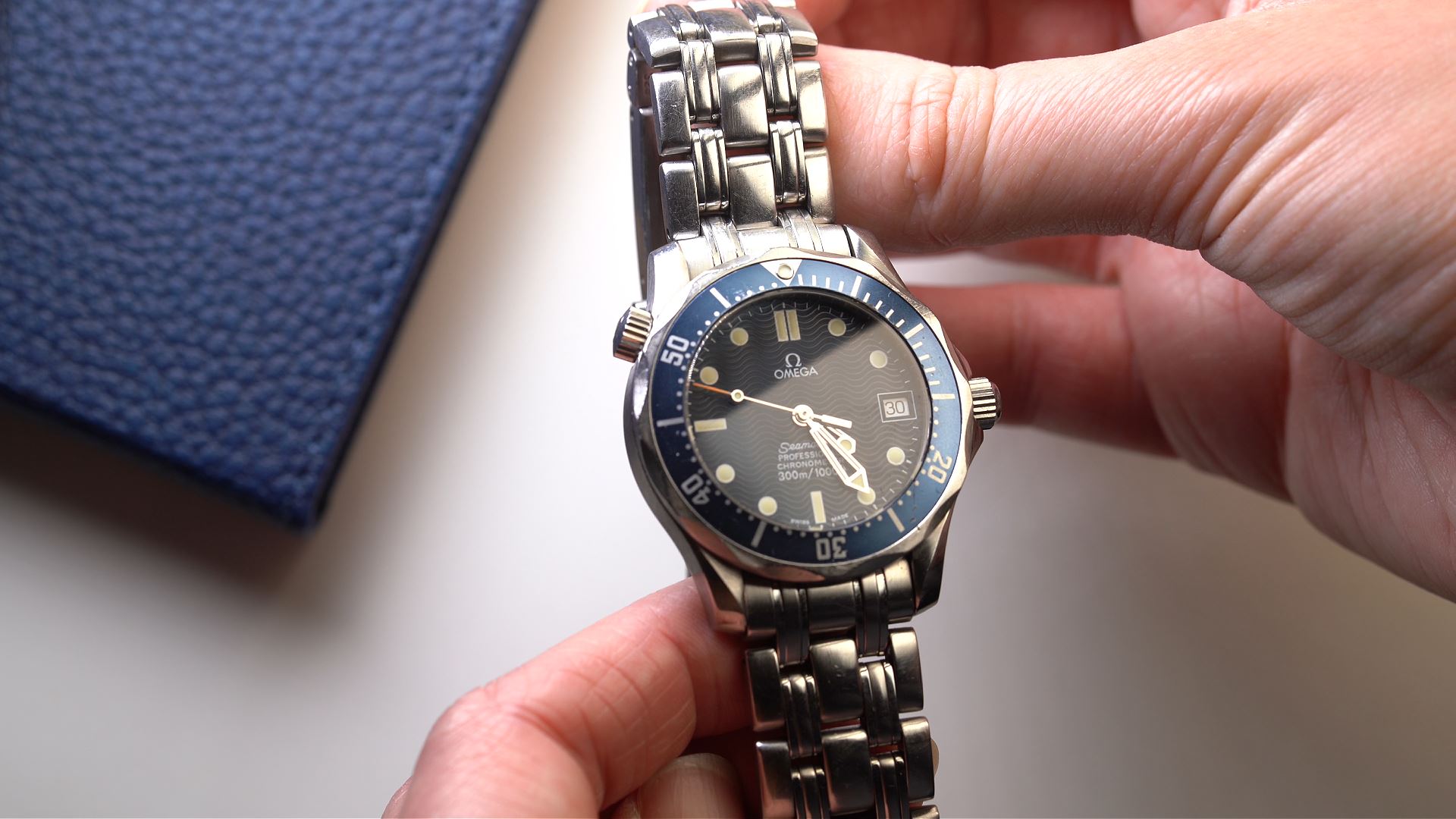
Omega are in trouble. Or at least, that’s what watch YouTube wants you to think. As an Omega owner and fan, that’s concerning.
For years, the narrative has been consistent: Omega’s market share is declining, the Holy Trinity are winning, and Omega make too many watches that aren’t the right size. The Morgan Stanley Watch Report recently seemed to land a final blow, claiming a major decrease in both sales value and volume for the brand.
But with the Swatch Group disputing these claims, Watches and Wonders just around the corner, Rolex leaks, Tudor speculation, and new releases from Omega and Longines, the question remains: are Omega really in trouble?
Morgan Stanley Watch Report
I don’t want to rehash the Morgan Stanley Watch Report too much—YouTube has done that already—but the key claim is that Omega now ranks fifth behind Rolex, Cartier, AP, and Patek in terms of sales value and volume.
A luxury slowdown has been predicted for a while. Middle-class buyers who enjoyed disposable income during the pandemic are feeling the pinch. Watches that were once aspirational are no longer easily accessible.
Grey market prices give us the clearest insight. Speedmasters and Seamasters are selling below retail—but that’s nothing new. These models have always been accessible relative to Rolex, AP, or Patek.
A quick look at WatchCharts data confirms this:
- White dial Seamaster 300m: £3,204 last April → £3,248 today (over £2,000 below retail).
- No Time to Die Seamaster: £5,532 → £5,735 (slight increase due to rumors of discontinuation).
- White dial Speedmaster: £5,965 → £5,579 (stable since last September).
- Regular sapphire Speedmaster: £4,564 → £4,826 (slight increase, perhaps thanks to new reverse panda models).
The takeaway? Demand remains consistent, sometimes rising, and the grey market offers value-conscious buyers an appealing route.
Omega’s New Releases
This year, Omega has had three major releases and one last year. Swatch Group releases tend to trickle out ahead of Watches and Wonders—an intelligent move that avoids the crowded spotlight.
- Planet Ocean 70s Style Diver (2025): Well received but higher priced.
- New Speedmaster References: Reverse pandas with lacquer dials, £8,700 steel, £41,300 gold.
- Winter Olympics Special Editions: Ignored here for brevity.
- Constellation Observatory: Master Chronometer two-hand watch, £9,100 steel, £48,400 platinum.
The modern Constellation Observatory is gorgeous, but it raises questions. How can Omega sell a £3,000 De Ville Prestige and a £48,000 Constellation side by side? Even if the Observatory is technically superior, is it three times the watch?
Brand Perception
Omega’s history plays a big role. Post-quartz crisis, Omega struggled more than Rolex or Patek. Jean-Claude Biver’s intervention in the early 2000s repositioned Omega as an attainable luxury brand anchored by the Seamaster and Speedmaster.
Seamaster equals Bond. Speedmaster equals space. Simple, iconic messaging.
Today, the market isn’t ready for an Omega more expensive than Rolex or Patek. This explains the pricing and popularity of the traditional steel Speedmaster—it’s perceived as accessible luxury.
Competition: Rolex, Tudor, and Longines
Omega also doesn’t exist in a vacuum. Rolex and Tudor dominate at comparable price points. For example, the steel Speedmaster is in the same realm as a Black Bay Chrono or even a Daytona at retail. While the Daytona may lack some of Speedmaster’s history, it carries the crown—a symbol of wealth and recognition that matters to many buyers.
Tudor, celebrating its centenary, will release new Black Bay and GMT models soon. Rolex has been leaking new watches, including an albino Daytona and a green stone Day-Date. Omega’s tool watches are under pressure.
Longines, sitting just below Omega, has been pushing hard with models like the Spirit, Zulu Time, and HydroConquest. Their revised HydroConquest now competes with the Seamaster 300m in design, finish, and value. Longines is entering “Phase 2” of their post-quartz crisis strategy, muscling into Omega’s territory.
So Are Omega Fucked?
Not at all. Omega may look like they’re chasing Rolex, Patek, and every trend at once, but it’s part of a wider Swatch Group strategy.
Think of it as generational play:
- Post-quartz crisis, Omega reinvented itself under Biver. Seamaster and Speedmaster anchored the brand.
- The smartwatch era eroded the need for everyday tool watches. Omega pivoted to higher-end, dressier pieces for collectors and loyal buyers.
- Current Omega models appeal to nostalgia and quality-conscious buyers who appreciate heritage.
Omega is in a transitional phase. AP focuses on complications, quartz is resurging via Seiko and TAG Heuer, and the luxury market is evolving.
The chatter about Omega being “in trouble” may simply be part of the brand’s grand plan.
The Takeaway
Omega’s market is changing, yes. But the demand for their iconic models is still strong, grey market prices are stable, and their new releases demonstrate innovation and careful positioning.
For collectors and fans, patience is key. Omega’s trajectory may look uncertain to outsiders, but the brand has weathered similar challenges before—and it’s likely to do so again.

Leave a Reply